
Torsten Frings
The Bremen engine who ran the midfield with quiet authority.

via Wikipedia: Torsten Frings · see source
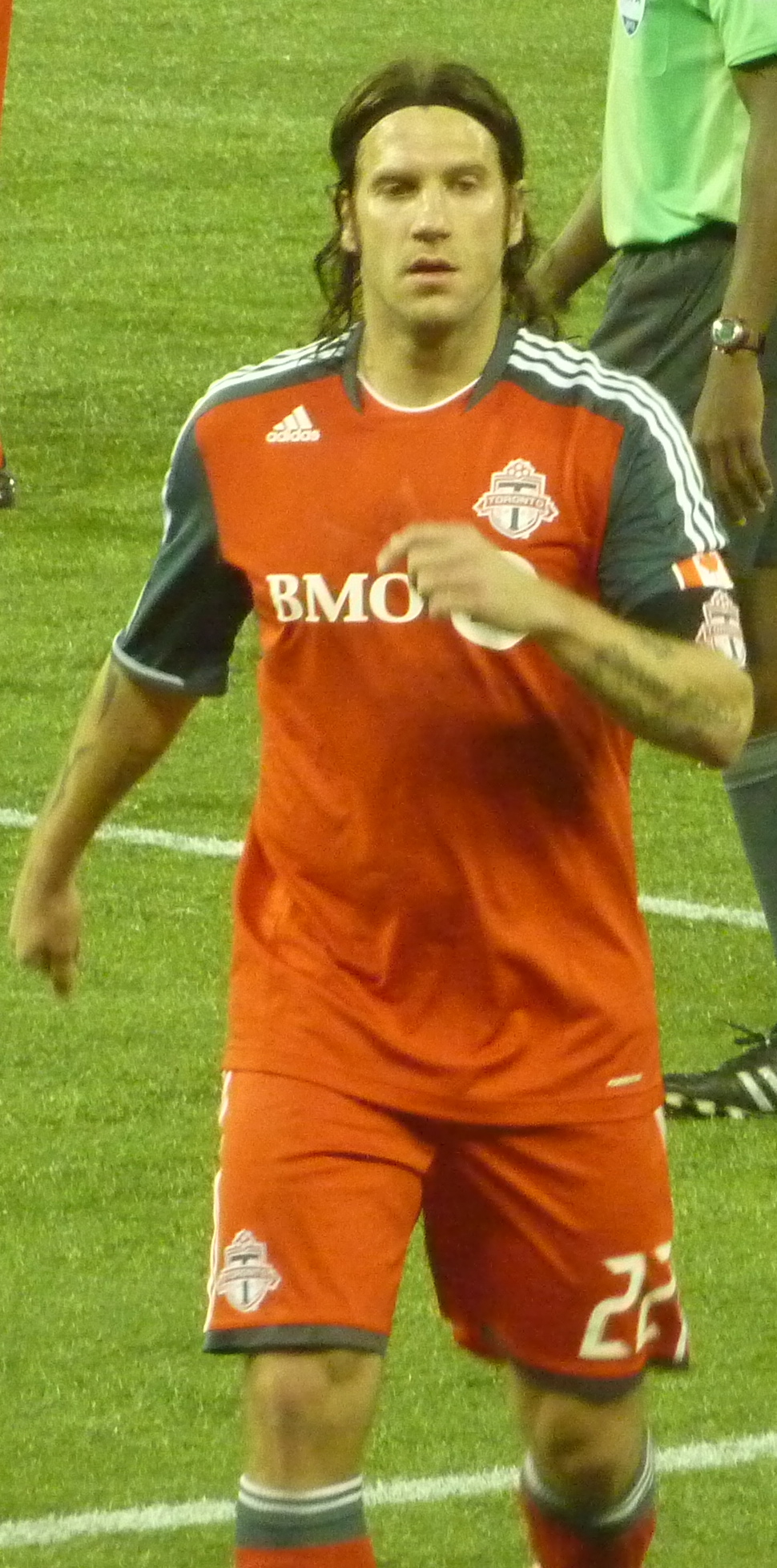
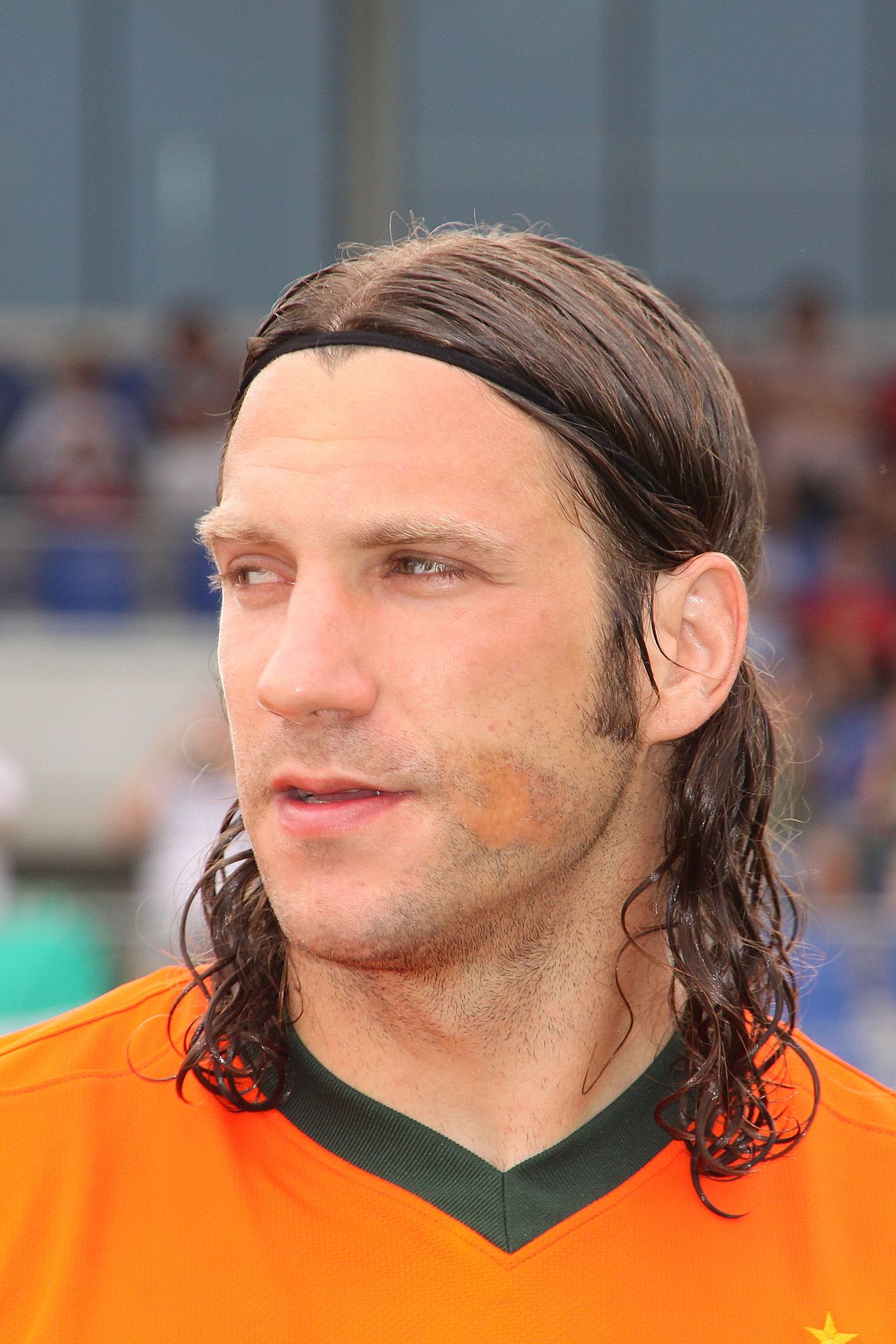
Torsten Klaus Frings (born 22 November 1976) is a German former footballer and manager, who last managed SV Meppen. A former midfielder, he played for several German clubs including Werder Bremen, Borussia Dortmund, and Bayern Munich, before ending his career with Canadian MLS side Toronto FC. At international level, he played 79 matches for the Germany national team since his debut in 2001, and represented his nation at two European Championships and two FIFA World Cups.
- Born
- 22 November 1976
- Position
- Midfielder
Verified Timeline
Lore & Background
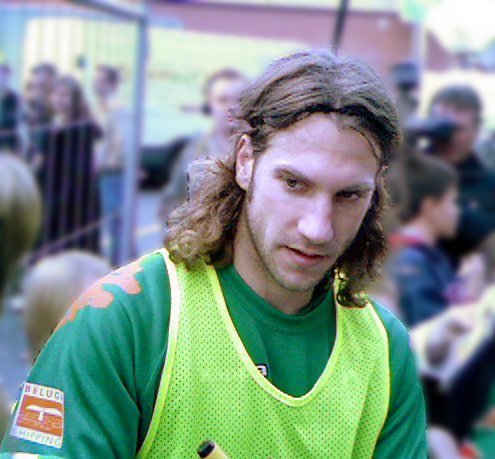
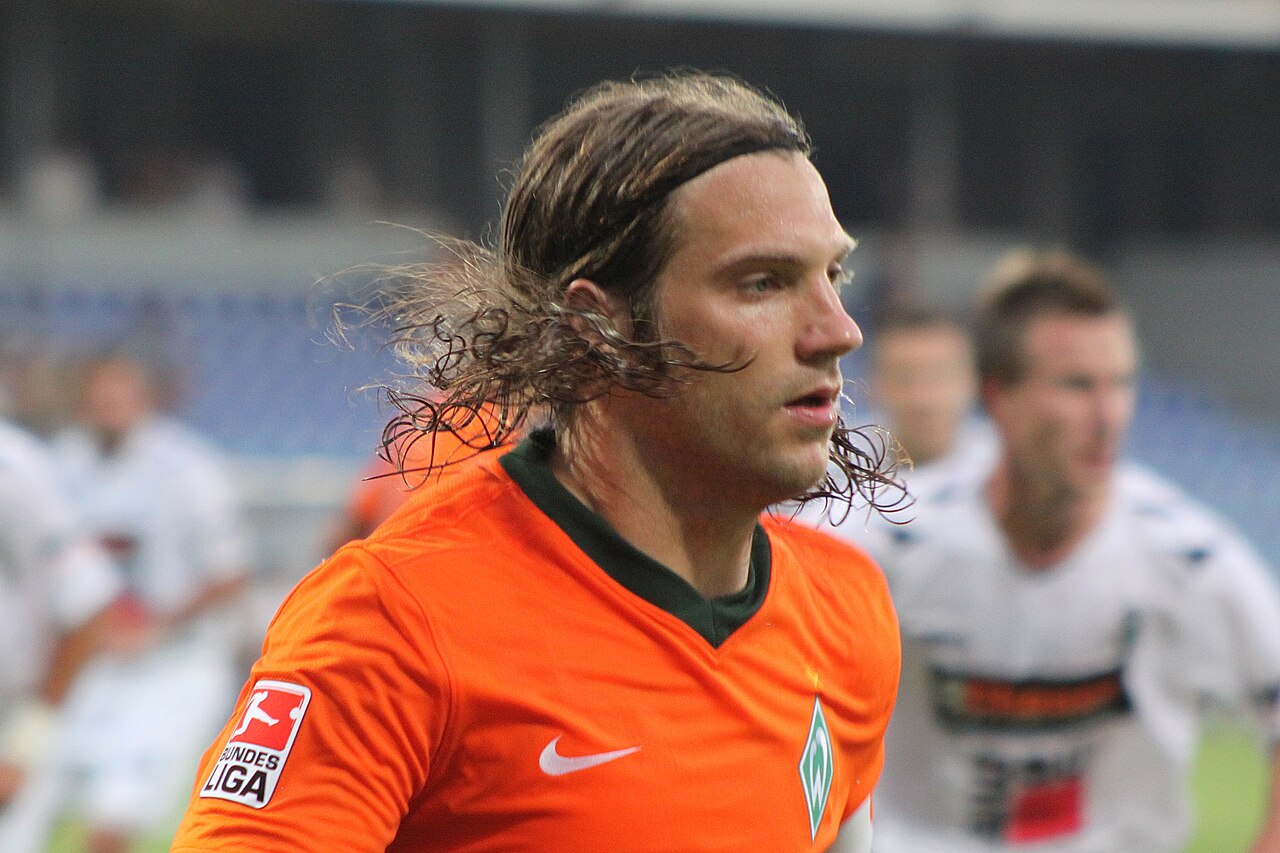
Torsten Frings' professional career began at third division Alemannia Aachen before a move to Werder Bremen in 1996–97. At the Weserstadion, he helped the outfit to a German Cup final defeat of Bayern Munich in 1999 and tallied more than 160 Bundesliga appearances and 15 goals over five and a half seasons. In 2002, he opted for a four-year deal with Borussia Dortmund for a reported fee of €10 million. After two seasons at Dortmund, he moved to Bayern Munich in 2004, where he won the domestic double but never really enjoyed his football. He rejoined Bremen in June 2005 on a three-year deal. On 29 June 2011, he joined Toronto FC as a designated player, making his debut on 20 July 2011 in a 1–0 home defeat to FC Dallas. He became permanent captain in March 2012, and scored his first MLS goal on 27 June 2012 in a 3–0 home victory over Montreal Impact. A hip injury requiring arthroscopic surgery led to his retirement in February 2013.
In Their Own Story
At the 2006 FIFA World Cup on home soil, Frings scored Germany's fourth goal in a 4–2 win against Costa Rica in the opening match, with a powerful drive from more than 30 yards. Following Germany's penalty shootout victory over Argentina on 30 June 2006, Frings was fined and suspended by FIFA for two games for his role in the brawl that broke out between the Argentine and German teams after the match. FIFA's Disciplinary Committee determined that Frings had punched Argentine forward Julio Cruz, even though Cruz himself had denied that Frings punched him. The suspension was announced only the day before Germany's semi-final versus Italy on 4 July 2006, rendering Frings unavailable for the important match – which Germany subsequently lost. Frings answered to the accusations: 'This is all politics. The Argentinians attack us, I defend myself and the Italians get worked up. With this suspension, FIFA just wanted to show that Germany doesn't get special treatment as the World Cup hosts.' He played his last international match on 11 February 2009 in a 0–1 home defeat against Norway, earning 79 caps in total.
Reader's Guide
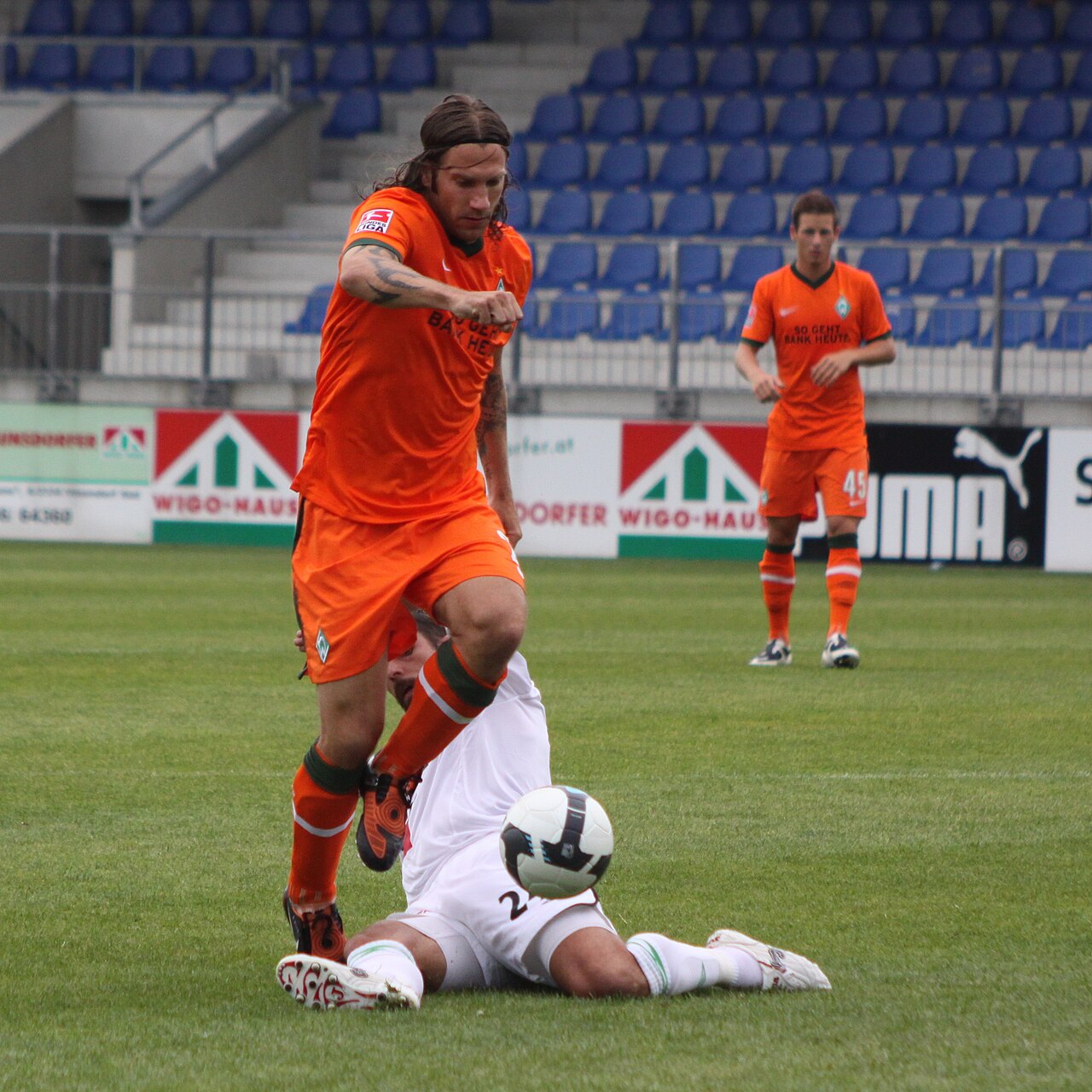
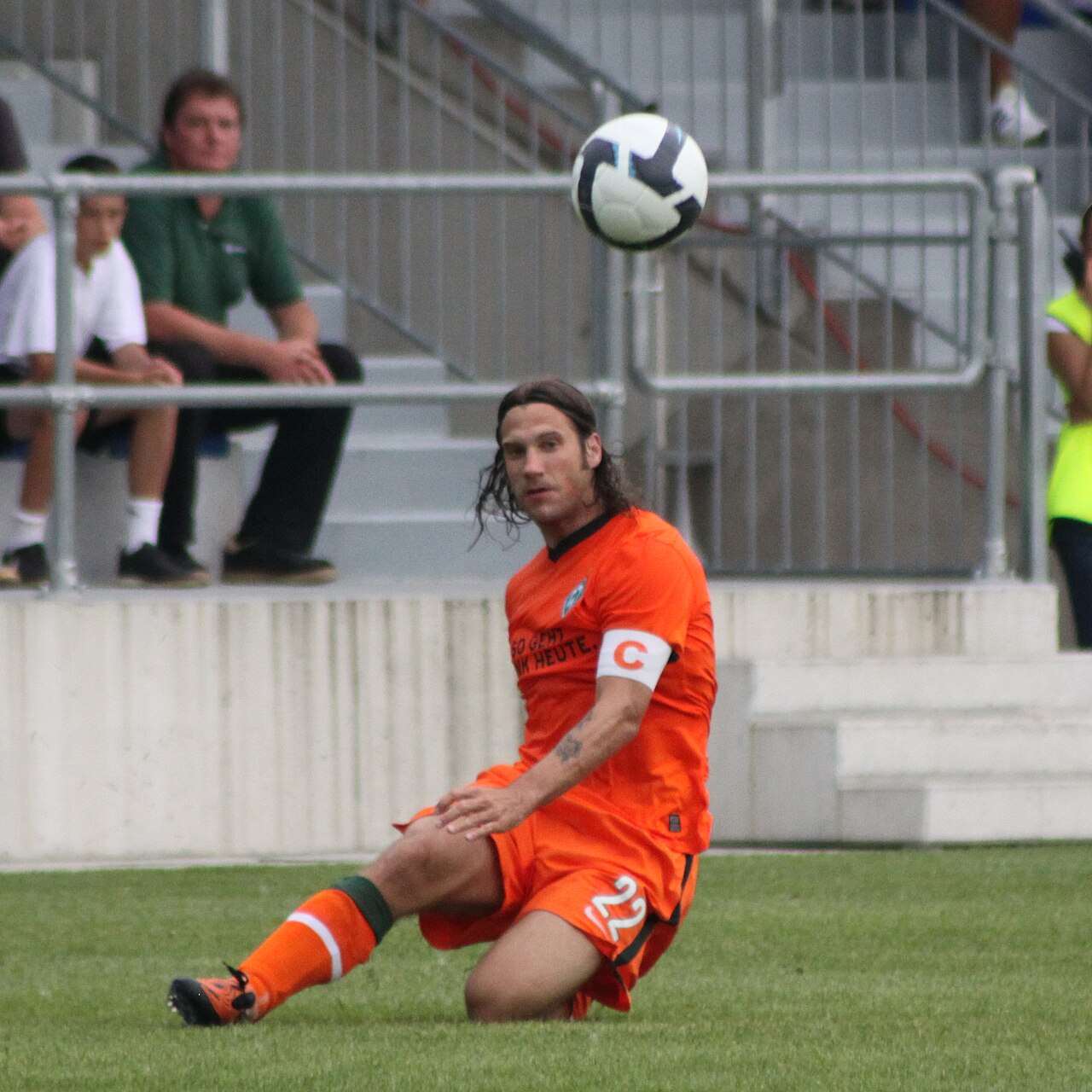
Frings was a versatile midfielder who played in several midfield positions, though he was most comfortable in the centre, running deep from his own team's box to the opposition's box due to his work-rate, vision, solid first touch and passing with either foot, despite his lack of notable pace. He was usually deployed as defensive midfielder, known for his tackling playing style. A large, tenacious and physically strong player, and a vocal presence on the pitch, he was also effective in aerial play and capable of playing as a defender, as a centre-back or sweeper, due to his organisational abilities, knowledge of the game, and fighting spirit. In addition to his defensive attributes, Frings was known for his leadership on the pitch, as well as his explosive, powerful shot from distance. After ending his playing career, he became a youth coach at Werder Bremen. On 25 October 2014, after Werder Bremen fired head coach Robin Dutt, Frings joined Viktor Skrypnyk's coaching staff. He received a coaching license from the German FA after a 10-month coaching course in March 2015. On 27 December 2016, he was appointed head coach of Darmstadt 98, but was relegated and later relieved of his duties on 9 December 2017. He was appointed head coach of SV Meppen on 14 July 2020 and sacked on 14 April 2021.
Did You Know?
- Despite the similar name, Frings was not named after the fictional character Gustavo Fring from Breaking Bad and Better Call Saul, as that character debuted in 2009, while Frings was born in 1976.
- Frings made his international debut in 2001 and earned 79 caps for Germany.
- He scored Germany's fourth goal in the 2006 World Cup opening match against Costa Rica from more than 30 yards.
- Frings was suspended for the 2006 World Cup semi-final against Italy after FIFA determined he punched Argentine forward Julio Cruz in a post-match brawl.
Club Career: A Decade of Movement Across German Football
Frings's club career stretched across more than a decade in Germany's top divisions before a final chapter in North America. He began at third-division Alemannia Aachen, then joined Werder Bremen in 1996–97, logging over 160 Bundesliga appearances and 15 goals across five and a half seasons. Highlights included a German Cup final run in 1999 and scoring the decisive goal in the 1998 UEFA Intertoto Cup final against FK Vojvodina. In 2002, with several European clubs circling, he signed a four-year deal with Borussia Dortmund for a reported €10 million. A knee injury in July 2003 kept him out until late January 2004, after which he stepped into a playmaking role and netted four goals in 16 games. A three-year stint at Bayern Munich brought a domestic double, yet he never felt settled under Felix Magath, who deployed him out of position. He returned to Bremen in June 2005, then crossed the Atlantic in 2011 to join Toronto FC in MLS. There he became permanent captain and scored his first league goal with a 22-yard free kick in June 2012. A hip injury requiring arthroscopic surgery derailed his 2012 season, and his slow recovery prompted his retirement in February 2013.
The 2006 World Cup: Brilliance and Brawl
The 2006 FIFA World Cup on German soil was a defining chapter in Frings's career, marked by both brilliance and controversy. In the opening match, he struck a powerful drive from more than 30 yards to score Germany's fourth goal in a 4–2 victory over Costa Rica. The tournament's most memorable moment for him, however, came after the penalty-shootout win over Argentina on 30 June. A post-match brawl erupted between the two squads, and FIFA's Disciplinary Committee determined that Frings had punched Argentine forward Julio Cruz, issuing a two-game suspension with one match on a six-month probationary period. The punishment was announced just one day before Germany's semi-final against Italy, rendering him unavailable for the match Germany ultimately lost. Frings publicly challenged the decision, calling it political and suggesting FIFA wanted to signal that the host nation received no special treatment. He noted that Italian media had heavily emphasized his role in the altercation after FIFA had reportedly already closed its investigation into other German players. Despite the controversy, Germany still finished third, defeating Portugal in the bronze medal match.
International Service: 79 Caps and Four Major Tournaments
Frings earned 79 caps for Germany between his 2001 debut and his final appearance on 11 February 2009, a 0–1 home defeat to Norway. His international tournament record spanned two European Championships and two World Cups. At the 2002 World Cup in Japan and South Korea, Germany reached the final before falling 2–0 to Brazil. During the quarter-final against the United States, Frings was involved in a controversial incident where he prevented a goal with his hand on the goal line; the referee ruled the handball involuntary. He also represented Germany at UEFA Euro 2004 and the 2005 FIFA Confederations Cup on home soil, where the team claimed a bronze medal. At Euro 2008, he was part of the squad that reached the final before being defeated by Spain. Notably, he was omitted from the 2010 World Cup squad by coach Joachim Löw, marking the end of his international career. His 79 appearances and four major tournament campaigns underscore his status as a reliable, consistent presence in the German midfield over nearly a decade of international service.
Playing Style: The Tenacious Engine in the Middle
Frings was a versatile midfielder most at home in the centre of the park, where his game was built on relentless work-rate rather than raw speed. He was known for running the full length of the pitch, from his own penalty area to the opposition's box, compensating for a lack of notable pace with a strong first touch, sharp vision, and the ability to pass effectively with either foot. While he could operate in several midfield roles, he was most frequently deployed as a defensive midfielder, where his tackling and physical dominance were his defining traits. Described as large, tenacious, and physically strong, Frings thrived in the gritty, combative aspects of the game. His versatility was evident throughout his career: at Borussia Dortmund in 2003–04, he transitioned into a playmaking role after a long injury layoff, scoring four goals in 16 appearances. At Bayern Munich, however, being played out of position under Felix Magath clearly diminished his effectiveness, suggesting that his comfort and impact were closely tied to being deployed in roles that leveraged his physicality and positional intelligence rather than forcing him into unfamiliar tactical contexts.
Gallery
Frequently Asked Questions
Who is Torsten Frings?
Torsten Klaus Frings (born 22 November 1976) is a German former midfielder who became one of Werder Bremen's most trusted engine-room players during the 2000s. After hanging up his boots he moved into management and most recently steered SV Meppen.
What role did Torsten Frings play at Werder Bremen?
He operated as a deep, box-to-box midfielder who dictated tempo, broke up opposition play, and linked the back line to the forwards with calm, no-nonsense authority. Fans often called him the 'Bremen engine' because he rarely let the team lose its structural shape.
How long did Torsten Frings stay at Werder Bremen?
He spent roughly eight seasons at the Weserstadion, arriving in 2000 and moving on to Borussia Dortmund in the summer of 2008. That entire run overlapped with Bremen's most consistent Bundesliga-challenging and Champions League campaigns of the decade.
Why is Torsten Frings remembered so fondly by Werder Bremen fans?
He was the tactical anchor and vocal leader through a period when the club regularly pushed for the title and competed in Europe. His relentless work rate, selfless passing, and refusal to take a day off made him a symbol of the 2000s Werder identity.
What did Torsten Frings do after his Werder Bremen years?
He continued playing at Borussia Dortmund, Bayern Munich, and Toronto FC in MLS before retiring from professional football. He then transitioned into coaching and management, with SV Meppen being his most recent club in charge.
More in Club History
Related in Werder Bremen
Links follow this subject's own source article.
Elsewhere in the Werder Bremen universe
Spotted an error? Know more?
This is a living reference — every entry is fact-audited, and reader corrections feed straight into our audit queue. Suggest an edit · See this site's audit record