
Weserstadion
Where the Green Wall roars and the Weser bends to listen.

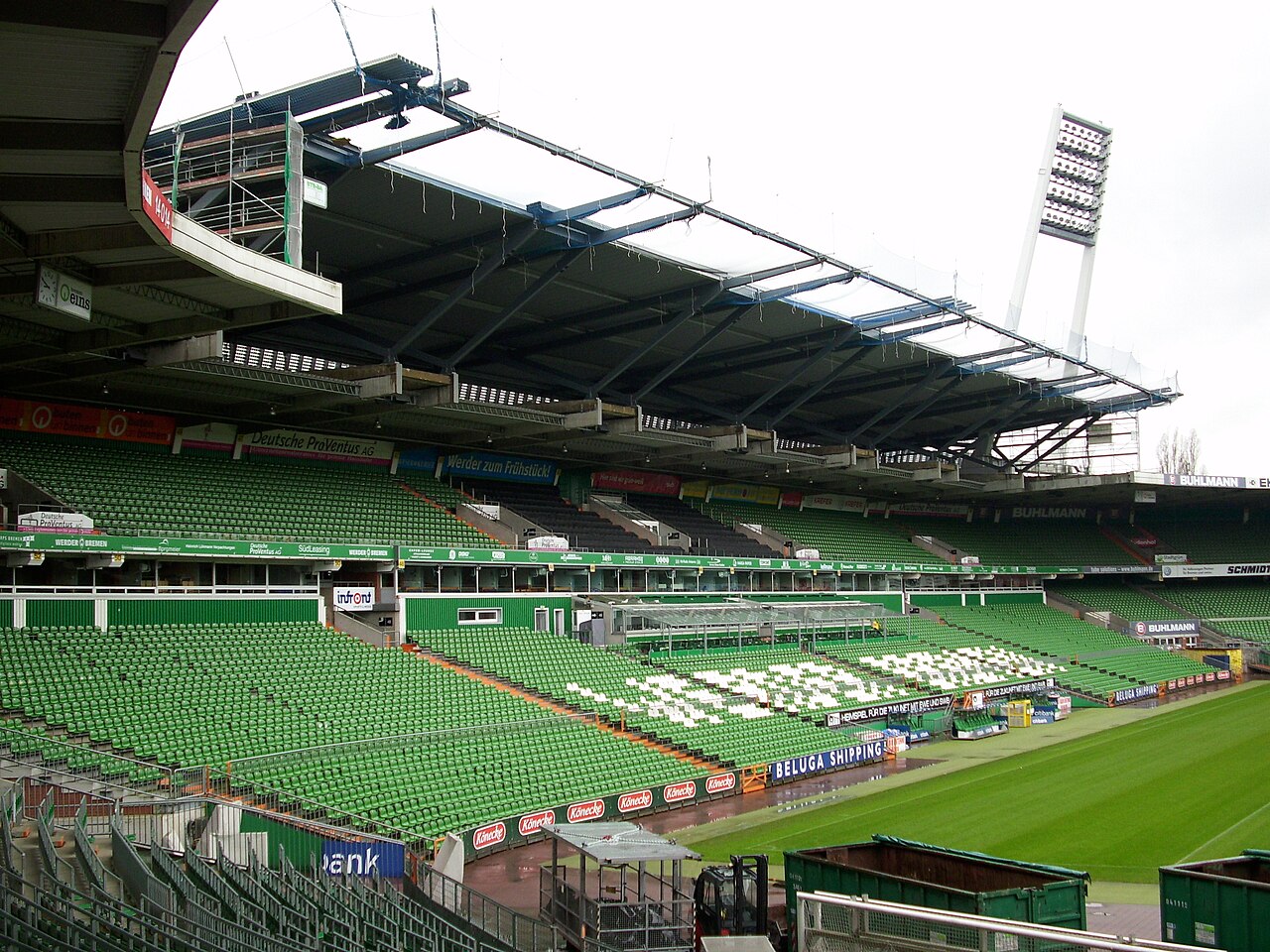
Werderfan10b Original uploader was Werderfan10b at de.wikipedia · CC BY-SA 3.0
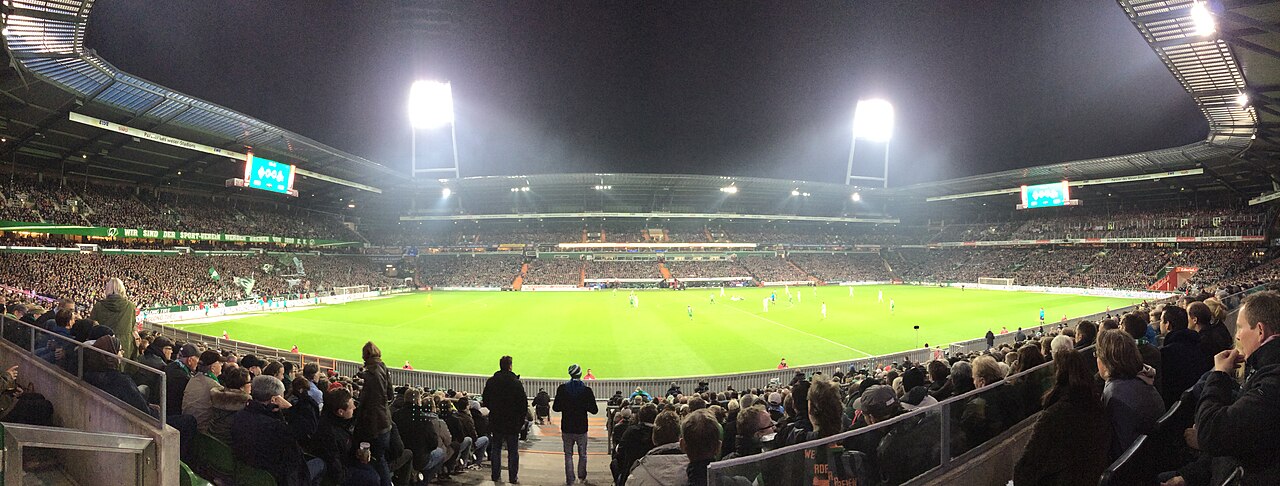
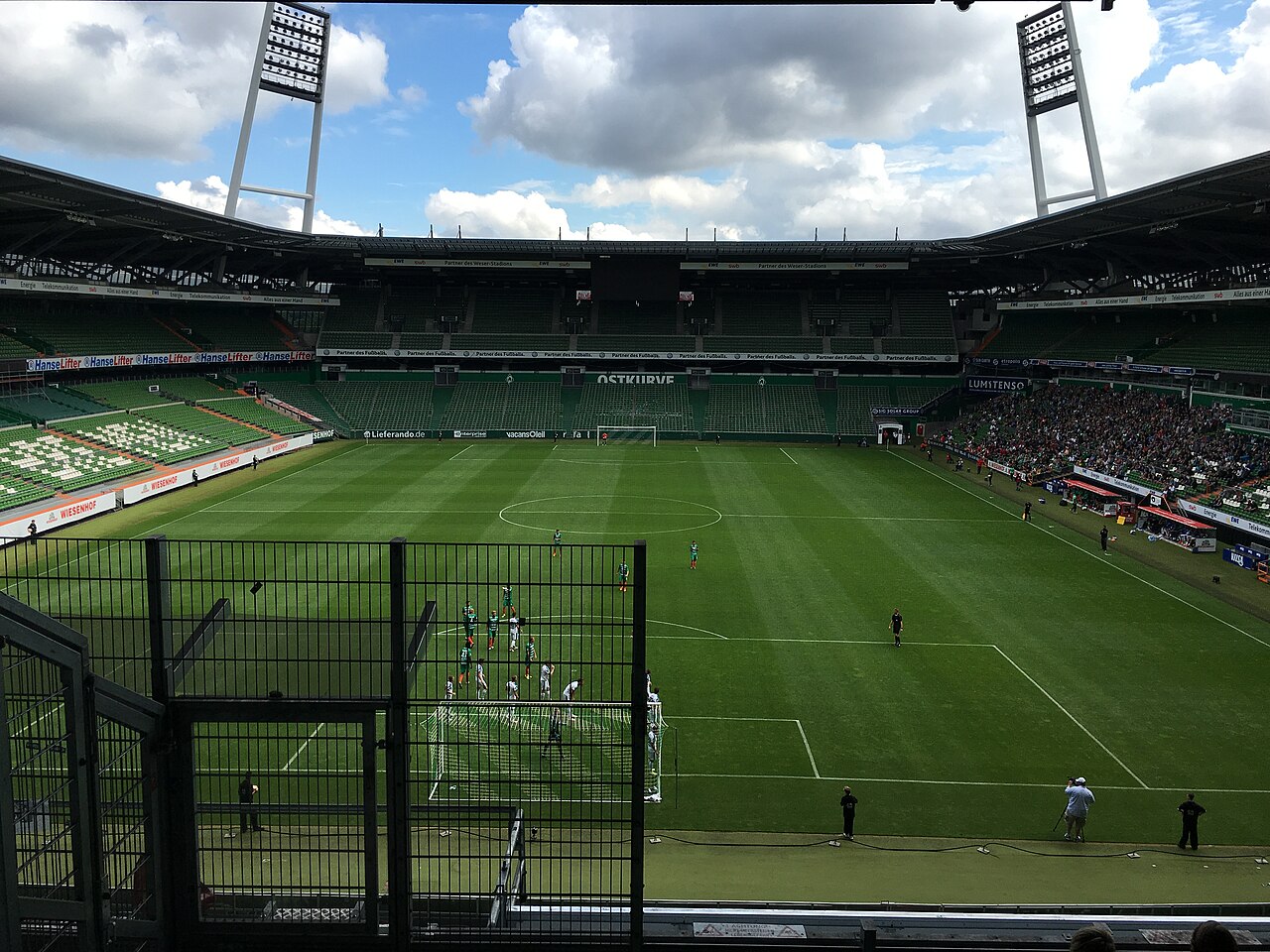
The Weserstadion is the home ground of SV Werder Bremen, nestled in the city's Osterdeich district beside the Weser river. For Werder supporters, it is not merely a venue; it is a second home, a fortress, and a stage where the ritual of the match is performed with a devotion that outsiders often struggle to fathom. The stadium is inseparable from its most iconic feature, Die Grüne Wand — the 'Green Wall' — the home end (Ostkurve) where Werder's ultras and dedicated supporters gather. It is a place where the boundary between crowd and team dissolves, where drums and coordinated chanting create a wall of sound that visiting teams feel in their chest before the first whistle. The Weserstadion is where Werder's identity as a club of the people, of the working-class north, is made tangible in steel, concrete, and green dye.
- Club
- SV Werder Bremen
- Location
- Bremen, Germany (Osterdeich, near the Weser river)
- Signature feature
- Die Grüne Wand (The Green Wall) — the home end (Ostkurve) for Werder Bremen's ultras and dedicated supporters
- International events
- UEFA Euro 1988, FIFA World Cup 2006
Lore & Background
What distinguished it from the start was not architectural grandeur but proximity: the stands sit close to the pitch, the rooflines are modest, and the whole structure feels like it was built by and for the people of the city rather than by a corporate board. That intimacy is the root of everything that makes the ground special. The true soul of the Weserstadion, however, lives in the Grüne Wand. The name is deceptively simple — 'the green wall' — but it encapsulates a phenomenon that has no real parallel in German football. On match days, the home end (Ostkurve) fills with a dense, undulating mass of green flags, scarves, and banners. Drums — large, bass-heavy, rhythmic — set the pulse. The singing is not a performance; it is a collective exhale, a shared breath that rises and falls with the play. When Werder scores, the sound that erupts from that end is described by opponents as a physical force, a wave that hits you in the sternum. It is not loud in the way a concert is loud. It is loud in the way a river in spate is loud: continuous, inevitable, and slightly terrifying. The stadium has hosted major international tournaments — matches at UEFA Euro 1988 and the 2006 FIFA World Cup — and each time the Green Wall turned the ground into something that broadcast cameras struggled to convey. The green does not just fill the stand; it seems to pour over the railings, to spill onto the concourse, to seep into the air itself. For the fans who have sat in that end through a hundred rainy November afternoons, the Weserstadion is not a place you visit. It is a place you belong to, and it belongs to you in return.
In Their Own Story
It is a Thursday in late November. The sky over Bremen is the colour of wet slate, and the rain is not falling so much as existing, a fine persistent mist that soaks the wool of your scarf and the leather of your boots. You push through the turnstile at the Grüne Wand and the noise hits you before the sight does — a low, rolling thrum from the drum section, felt in your molars before your ears register it. The air smells of wet concrete, cheap coffee from the kiosk, and the faint metallic tang of the river wind that funnels off the Weser and through the open ends of the stand. Around you, two thousand strangers are doing the same thing you are: shaking the rain from their jackets, pressing a warm hand against the cold steel of the railing, muttering a half-remembered lyric to the anthem. Then the team walks out, the drums shift into a driving four-four, and the Green Wall rises as one. You are not watching the match. You are inside it. You always have been.
Reader's Guide
You know the smell. November at the Weserstadion is not a single scent but a layering: the cold mineral bite of river air threading through the open stand, the warm yeasty ghost of the Currywurst stand two rows back, the damp wool of a hundred scarves pressed together in the press of the crowd. It is the smell of a place that has been wet and loud for fifty years, and the stone has absorbed it. You hear the drums before you see them. The bass section sits at the front of the Grüne Wand, and on a cold evening the sound does not travel so much as it arrives, a low pressure change that you feel in your diaphragm. Then the singing layers in — not a single song but a texture, a wall of voices that shifts key and rhythm with the flow of the match. When the ball goes wide, the rhythm drops. When it goes near the box, it surges. You stop thinking in words. You think in pulse. You see the green. Not the green of a logo or a badge, but the green of a thousand flags and scarves moving in a slow tide, catching the flat November light and throwing it back as a single colour. The stand is not full of people. It is full of green. The people are the mechanism; the green is the message. You feel the cold in your knuckles on the railing, the slight give of the concrete under your boots, the vibration of the drum in the floor. You are not a spectator. You are a component. The Weserstadion does not host you. It contains you.
Did You Know?
- The Grüne Wand is not an official name given by the club; it emerged organically from fan culture and media usage to describe the home end's (Ostkurve) sea of green flags and coordinated support.
- The Weserstadion's open-air design — with no full roof over the stands — means that on a November evening the Weser river wind can carry directly through the stands, a detail fans have long woven into the ground's identi
- Bremen's status as a host city for both UEFA Euro 1988 and the 2006 FIFA World Cup made the Weserstadion a rare domestic ground to feature in two major international tournaments within a single generation.
- The drumming culture of the Grüne Wand is not a single percussionist or group but a coordinated network of drummers that drives the home end's atmosphere throughout the match.
Setting & Identity
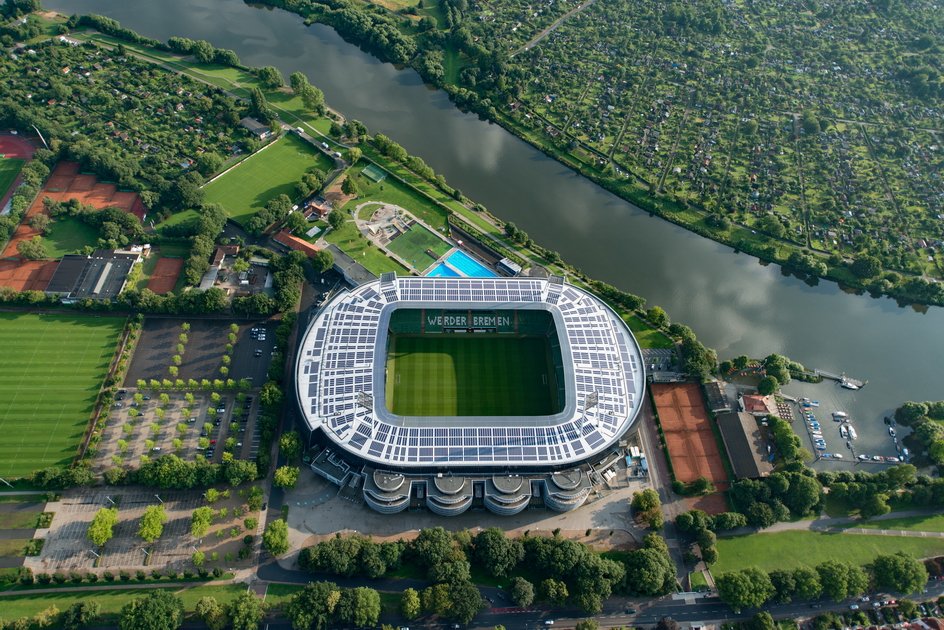
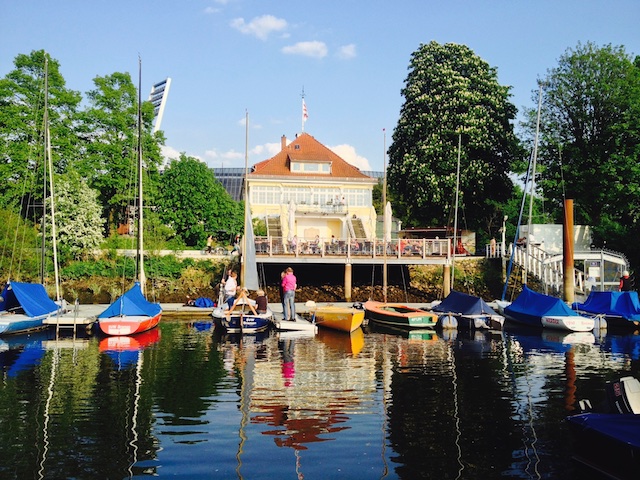
The Weserstadion sits on the north bank of the Weser River in Bremen, Germany, nestled among lush green parks that give the area a distinctly natural character. The name "Werder" itself is a regional German term referring to a river peninsula, perfectly capturing the stadium's geographical identity as a piece of land jutting into the waterway. This scenic riverside positioning is not merely aesthetic; it places the venue in a green, park-like environment that distinguishes it from more urbanized stadiums. Despite this pastoral setting, the stadium remains remarkably accessible to the broader city. The center of Bremen lies only about a kilometre away, meaning fans and visitors can easily walk or take a short transit ride to reach the venue. This combination of natural surroundings and urban proximity creates a unique atmosphere, where the roar of a Bundesliga crowd blends with the quiet of riverside parks. The stadium serves as the home ground for Werder Bremen, a club whose very name echoes the local geography, reinforcing the deep connection between the team, the city, and the river that has shaped the region for centuries.
Architectural Evolution
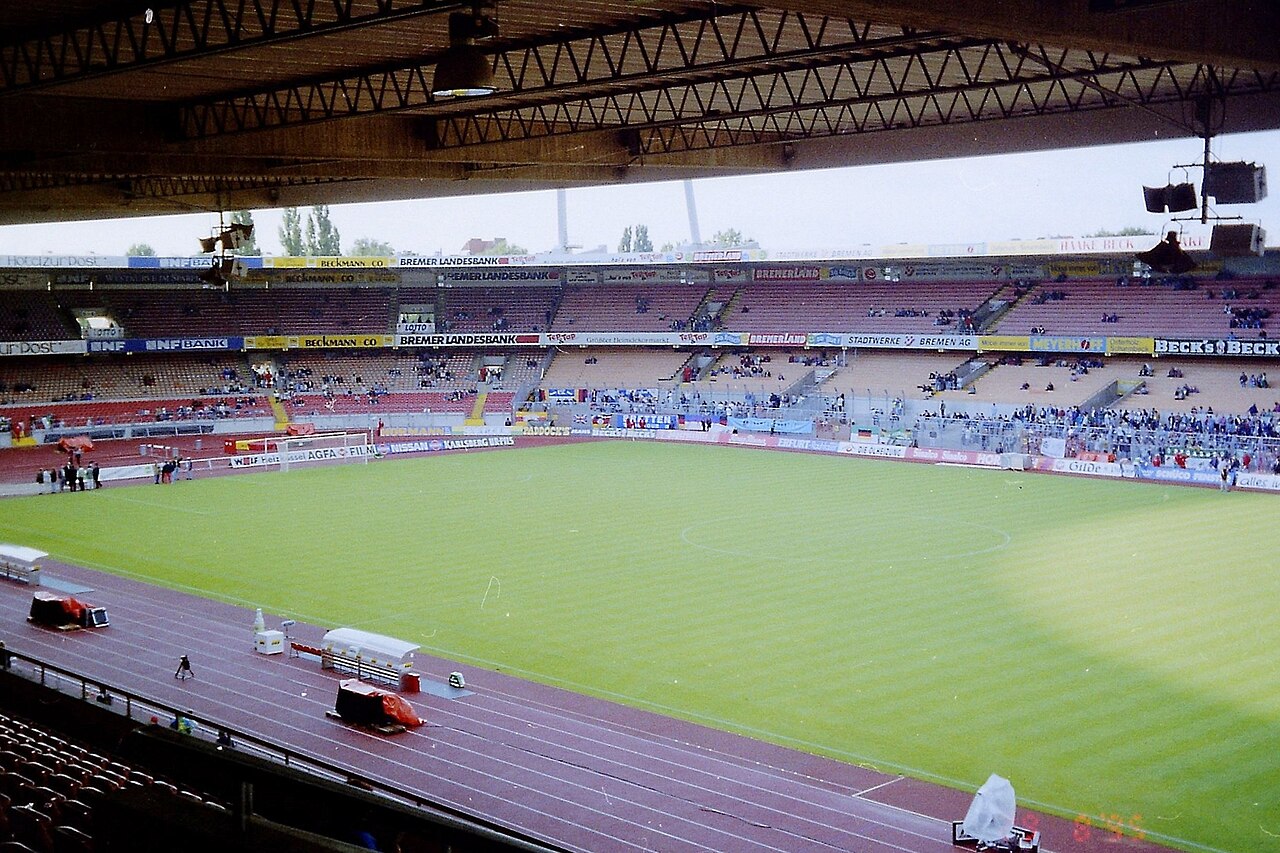
The Weserstadion has undergone a remarkable transformation over the decades, evolving from a multi-purpose venue into a dedicated modern football ground. Originally, the stadium featured an athletics track surrounding the pitch, a common design for mid-twentieth-century German stadiums. That track was partially dismantled in 2002, a renovation that also saw the playing surface lowered by 2.1 metres and the straight-side stands extended to align with the new pitch dimensions, adding roughly 8,000 seats. In 2004, four office towers rose behind the north stand, housing a restaurant as well as workspace for the club and local businesses. The most dramatic overhaul came between 2008 and 2011, when the stadium was essentially rebuilt from the ground up. Both the east and west ends were demolished and reconstructed parallel to the goal lines, eliminating the last remnants of the old athletics track. The exterior was clad in photovoltaic panels, and an entirely new roof was installed atop the existing support framework after the original roof structure was removed. The project was completed just in time for the 2011/12 season.
Capacity & Ownership Structure
Since the completion of its major reconstruction at the start of the 2011/12 season, the Weserstadion has maintained a seating capacity of just over 42,000 for domestic Bundesliga matches. For international fixtures, where UEFA regulations typically require additional safety zones and reduced seating, the capacity drops to over 37,000. These figures reflect the stadium's status as one of the larger venues in German professional football, a fitting home for a club like Werder Bremen that has long been a mainstay of the top flight. Ownership of the ground is structured through Bremer Weser-Stadion GmbH, a company held in equal halves by SV Werder Bremen and the city of Bremen. This fifty-fifty arrangement means that the stadium is not solely a club asset but a shared civic institution, with the municipality bearing an equal financial stake alongside the football club. This model of co-ownership is notable in German football, as it ties the long-term stewardship of the venue to both sporting interests and broader public responsibility, ensuring that the stadium serves the community as well as the team that calls it home.
Beyond Football: Concerts & International Matches
While the Weserstadion is primarily known as a football ground, its large capacity and open architecture have made it a sought-after venue for major musical acts. Over the years, the stadium has hosted performances by some of the biggest names in rock and pop, including Bon Jovi, Michael Jackson, Tina Turner, Depeche Mode, Metallica, The Rolling Stones, Guns N' Roses, and Van Halen. This diverse roster of headliners underscores the venue's versatility and its appeal to artists seeking a large, atmospheric setting in northern Germany. The stadium has also featured in international football, though not without controversy. A UEFA Euro 2016 qualifier between Germany and Gibraltar was originally scheduled for 14 November 2014 at the Weserstadion. However, the match was relocated to Frankenstadion in Nuremberg following a dispute between the German Football Association and the State of Bremen over the cost of providing police security. This incident highlighted the ongoing tensions between football authorities and regional governments regarding the financial burden of hosting high-profile international fixtures.
Gallery
Frequently Asked Questions
Which major international tournaments has the Weserstadion hosted?
The stadium was a designated venue for UEFA Euro 1988 and later for the FIFA World Cup 2006. Both events placed Bremen and its supporters on a global stage in front of audiences far larger than a typical Bundesliga crowd.
More in Stadium & Culture
Elsewhere in the Werder Bremen universe
Spotted an error? Know more?
This is a living reference — every entry is fact-audited, and reader corrections feed straight into our audit queue. Suggest an edit · See this site's audit record