DFB-Pokal 1966
One cup, one city, one afternoon that made Werder forever.

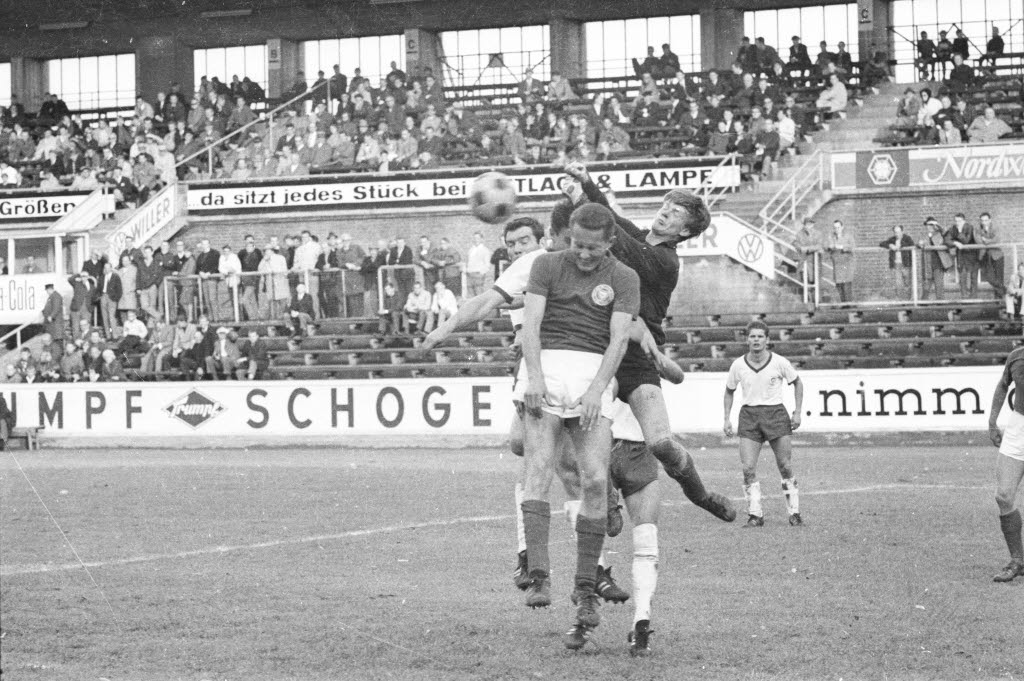
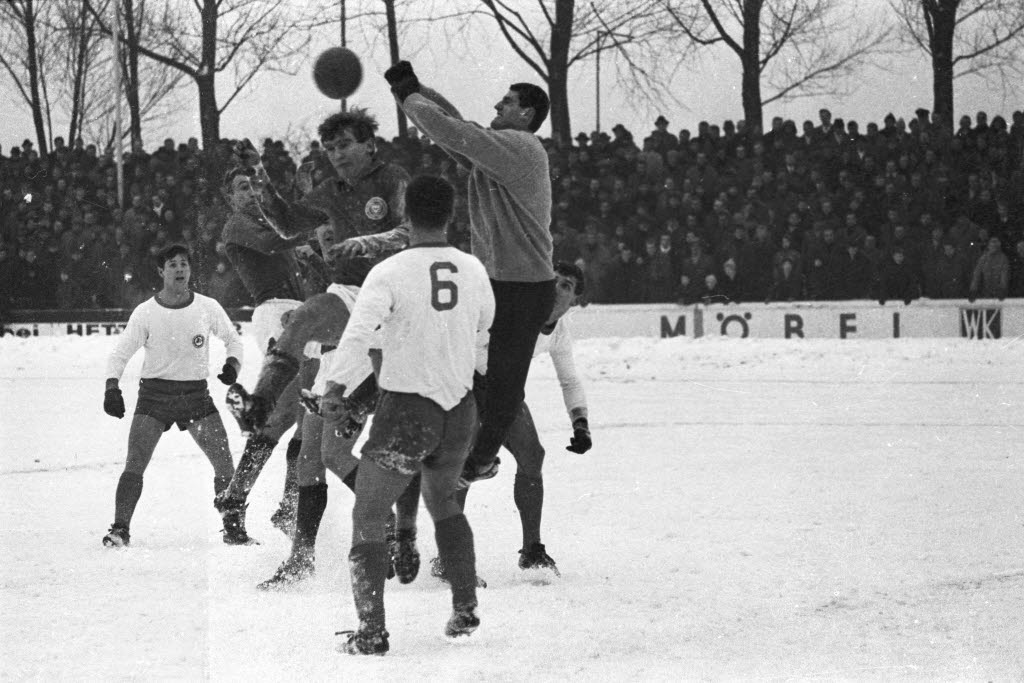
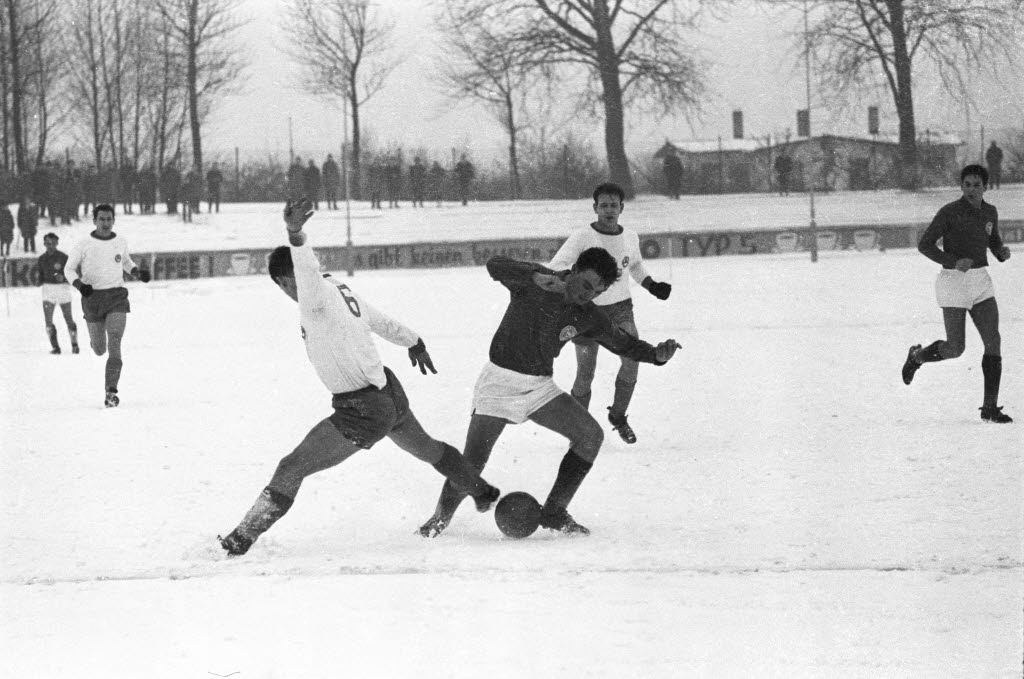
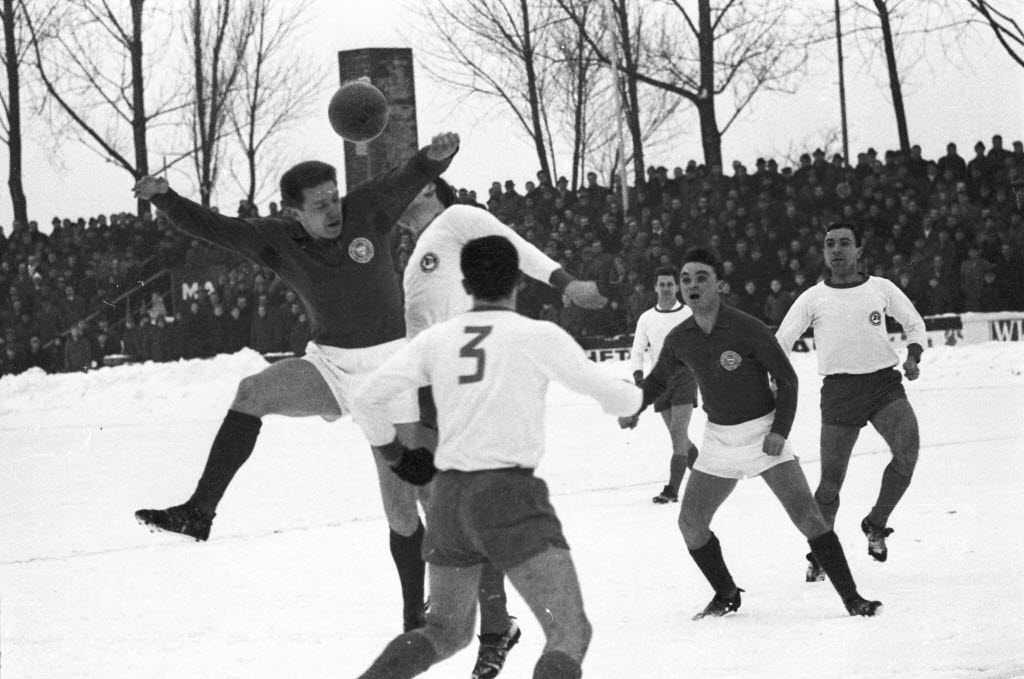
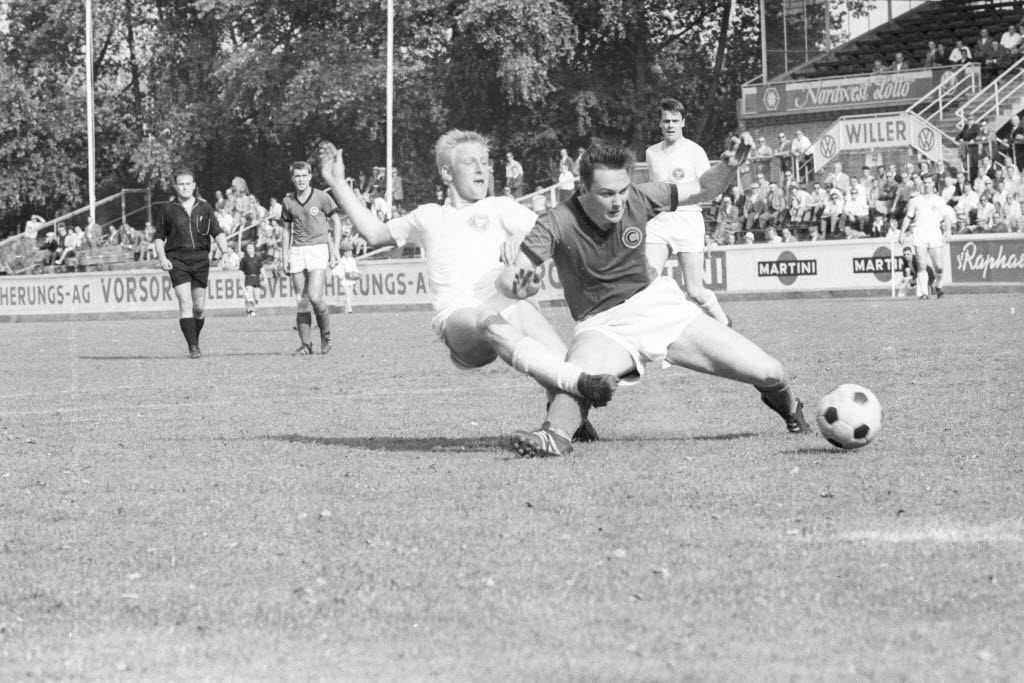
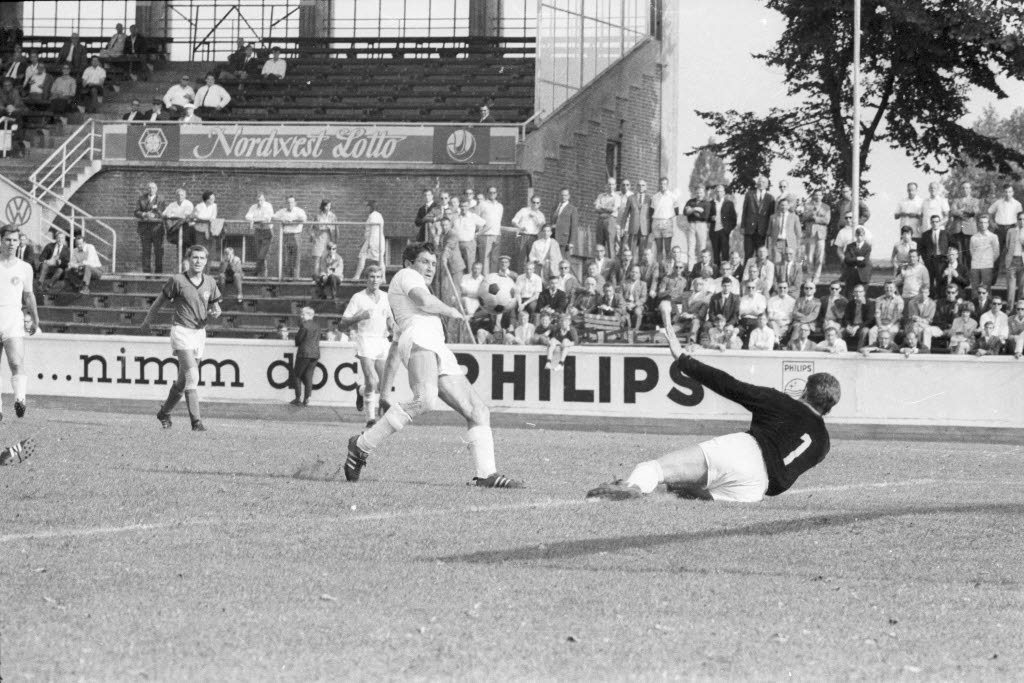
Magnussen, Friedrich (1914-1987) · CC BY-SA 3.0 de
In a final played at the Olympiastadion in Berlin, Werder defeated Borussia Mönchengladbach to claim the cup, an achievement that still anchors the club's identity more than sixty years on. For a city whose football culture was still finding its voice in the 1960s, that single afternoon at the Wumme and in Berlin transformed a regional club into a national story. It is the trophy that grandmothers still hold up at family dinners, the one that proves Werder was never just a footnote.
- Competition
- DFB-Pokal (German Cup)
- Season
- 1965–66
- Result
- Winners
- Final opponent
- Borussia Mönchengladbach
- Final venue
- Olympiastadion, Berlin
- Significance
- Werder Bremen's first major national trophy
Lore & Background
In the mid-1960s Werder Bremen was a young Bundesliga club, still settling into the top flight after promotion in the early sixties. They were not the giants of the south or the west. They were a Weser-side team with a passionate but modest following, playing in a stadium that smelled of river mist and cheap beer. To win the DFB-Pokal — Germany's premier knockout competition — was to announce that this club belonged on the same stage as the traditional powerhouses. Each round was a statement: here is Bremen, here is the Wumme, and we are not going home quietly. By the time the final arrived in Berlin, the entire city had leaned in. A port city that had long been told it was 'just' a club had something to show. The aftermath was electric.
In Their Own Story
The rain had stopped but the pitch at the Olympiastadion still glistened under the evening lights. In the Werder dressing room, the laces were being re-tied for the third time — nerves, not cold. Outside, the Berlin crowd roared for the home atmosphere, but the green-and-white shirts in the tunnel could hear the Bremen end chanting, a thin but stubborn thread of sound cutting through the noise. A young player, still not quite twenty, pressed his forehead against the cold locker door and whispered to no one: "We're doing this." The captain clapped him on the back. "We are."
Ninety minutes later, the trophy was in their hands, the Weser mist seemed to rise all the way to Berlin, and a city that had been told it was small finally had proof it wasn't.
Reader's Guide
The trophy: DFB-Pokal, 1965–66 season. Werder Bremen, winners. The number that matters: one. One major trophy. It was not the 2004 cup, not the 1988 European Cup Winners' Cup. It was the first. And that is why it still gets mentioned. Not because the scoreline is the most dramatic in German cup history — it is not. But because the man who laced his boots that evening in the Berlin tunnel was twenty-two, and the grandmother who held him at the Wumme the night before was already saying, "They'll do it, they'll do it," to anyone who would listen. She was right. And every Werder family that has sat down to dinner since has had a version of that sentence on the table, passed down like a recipe, like a prayer. The cup on the shelf is not a number. It is the first time a small city said its name loud enough for the rest of Germany to hear.
Did You Know?
- The final was played at the Olympiastadion in Berlin, the traditional neutral venue for DFB-Pokal finals of that era.
A Tournament in Flux – The 1966 Edition's Format Context
The 1966 DFB-Pokal arrived at a moment when the competition's structure was still being defined. The Bundesliga had only launched in 1963, meaning automatic entry for its clubs was a mere three seasons old. The tournament sat in a liminal period: the tiny four-team format that had characterized the late 1950s had already been abandoned, yet the sprawling 128-team era would not begin until 1973. This meant the 1966 field occupied a middle ground in size and ambition. Reserve sides were still permitted to enter at this point, a rule that would not change until 2008. The competition carried the weight of being German football's second-most prestigious club honour, trailing only the league title, and its annual rhythm from August through May gave clubs a second pathway to glory across the season.
The Replay Era – When Draws Were the Norm
In 1966, a level score after 90 minutes did not end a cup tie. The rules of the era demanded two 15-minute overtime periods, and if the deadlock persisted, the entire match was replayed with the home-and-away designations swapped. This system produced notorious episodes in the competition's earlier history: in the 1939 Tschammer-Pokal, the semi-final between Waldhof Mannheim and Wacker Wien was drawn three separate times before a coin toss settled the matter. The DFB would not abandon the replay mechanism until the chaos of 1970, when Alemannia Aachen and Werder Bremen also required a lot-draw after two drawn encounters. For the 1966 participants, the prospect of a replay was a real and unsettling possibility, adding an extra layer of uncertainty to what was already a high-stakes knockout contest.
A Ticket to Europe – The Cup Winners' Cup Stakes
By 1966, winning the DFB-Pokal carried a tangible European reward. Since 1960, the cup champion had earned a place in the European Cup Winners' Cup, the continental competition dedicated to domestic cup holders. This meant the 1966 final was not merely a domestic trophy but a gateway to international football. The qualification rules included an important contingency: if the cup winner had already secured a berth in the European Club Champions Cup through its league performance, the losing finalist would inherit the Cup Winners' Cup slot. This provision ensured that the final always carried maximum stakes for both sides, as either team could walk away with a European campaign. The Cup Winners' Cup would later be abolished in 1999, but in 1966 it represented a prestigious and competitive continental stage, elevating the DFB-Pokal's significance well beyond its domestic borders.
A Young Institution – The DFB-Pokal's Post-War Identity
The 1966 edition was the product of a competition still building its modern identity. Born in 1935 as the Tschammer-Pokal, the tournament was suspended in 1944 amid World War II and formally disbanded with the collapse of Nazi Germany. It was not until the 1952–53 season that West Germany reinstated the cup under its current DFB-Pokal name, with Rot-Weiss Essen lifting the first post-war trophy. By 1966, the competition had roughly fourteen seasons of continuous West German history behind it. The final venue was still chosen on short notice each year, a logistical arrangement that would persist until 1985, when the DFB permanently fixed the Olympic Stadium in Berlin as the host ground. The East German equivalent, the FDGB-Pokal, had been running separately since 1949, a division that would not end until the 1991 merger following reunification.
Gallery
Frequently Asked Questions
Who did Werder Bremen beat to win the 1966 DFB-Pokal?
Werder defeated Borussia Mönchengladbach in the final to lift the German Cup. The victory came in the 1965–66 season and remains the club's most cited cup triumph.
Where was the 1966 DFB-Pokal final played?
The match took place at the Olympiastadion in Berlin. For a mid-table Bundesliga side from the north-east, winning on that stage made the afternoon feel almost mythic.
Why is the 1966 DFB-Pokal win considered so important to Werder Bremen?
It was the first major national trophy the club had ever won, turning a regional team into a household name virtually overnight. More than sixty years on, it still anchors Werder's identity and is the trophy fans and families reference most often.
Was the 1966 DFB-Pokal Werder Bremen's first major honour?
Yes — that cup was the club's first significant national trophy. Before that single afternoon in Berlin, Werder had not yet claimed a major domestic honour.
More in Honours & Records
Elsewhere in the Werder Bremen universe
Spotted an error? Know more?
This is a living reference — every entry is fact-audited, and reader corrections feed straight into our audit queue. Suggest an edit · See this site's audit record